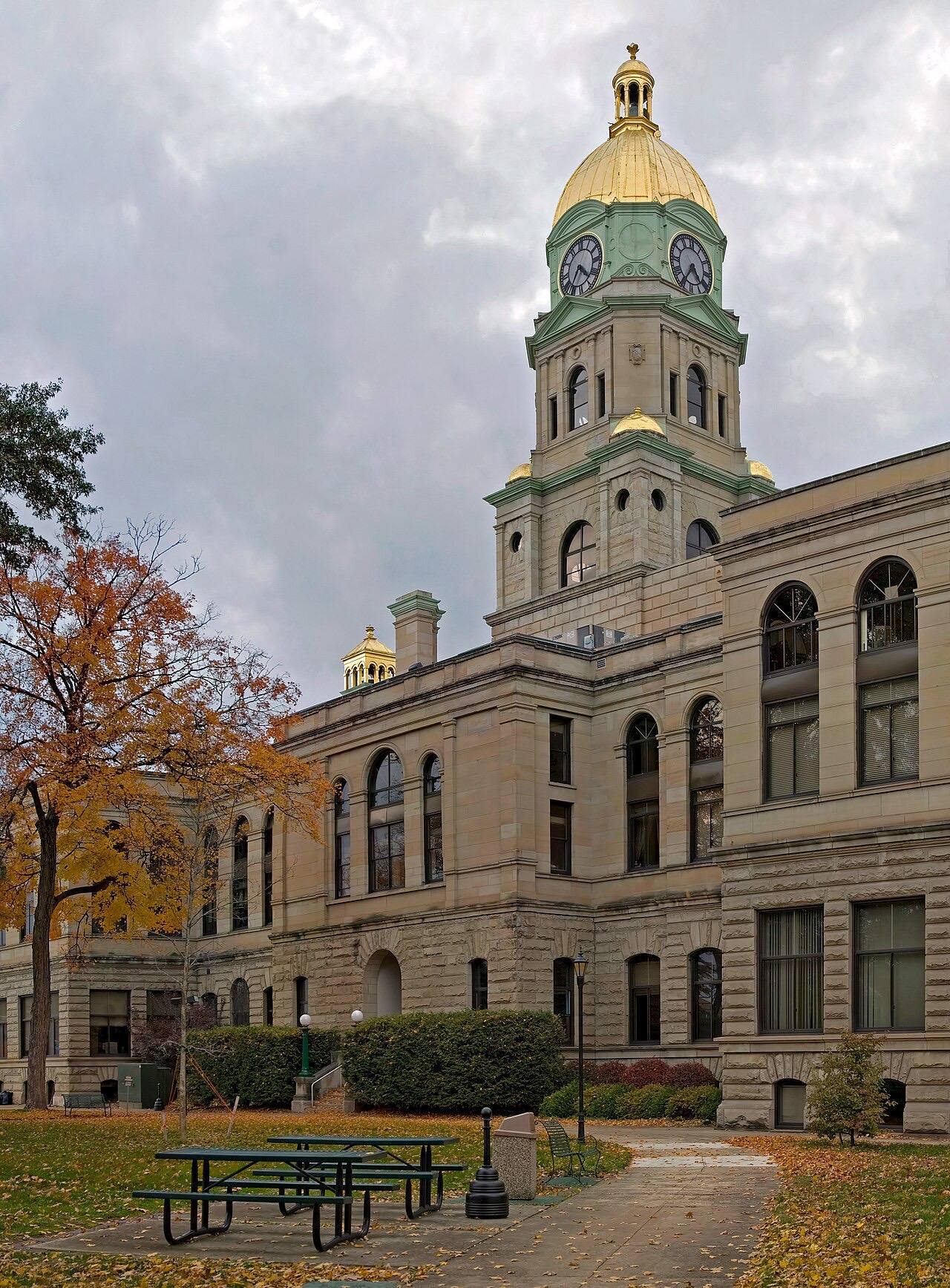

Washington. The elections that fill the calendar with noise are the smallest part of self-government. They are the punctuation. The sentences are written in between, in low-ceilinged rooms on weekday evenings, by councils and commissions and boards whose names most citizens could not recite. It is there, and not chiefly in the marble buildings of the capital, that the decisions touching an ordinary day are actually made.
Consider how little of daily life the federal government arranges directly, and how much is arranged nearer to home. The water that runs from the tap, the condition of the road to work, the hours of the library, the boundary of a school district, whether a neighbor may build a second story or open a shop: these are the province of local government. They are settled quietly, continuously, and close at hand, by people who can often be reached by telephone.
The bodies that do the work
American local government is not one machine but several, layered and overlapping. A city or town is usually governed by a council, elected to pass ordinances and adopt a budget, often working alongside a mayor or a hired manager who runs daily operations. Above or beside the city sits the county, governed by a board of commissioners or supervisors, responsible for the wider matters of roads, courts, jails, and the conduct of elections themselves.
Then come the boards that specialize. A school board sets policy and budget for the public schools. A planning and zoning board decides how land may be used, and hears the requests of those who wish to build something new or something different. A clerk keeps the records, posts the notices, and holds the minutes, an office that sounds dull and is in fact the memory of the whole enterprise. None of these bodies makes headlines. All of them shape the street where a citizen lives.
Why the nearest government is felt first
There is a paradox in American civic attention. The offices that command the most passion are often the ones most remote from daily experience, while the offices that govern that experience most directly attract the least notice. A distant vote in the capital may or may not alter a given household in a given year. A local decision about a stop sign, a sewer assessment, a school calendar, or a building permit is felt at once.
This is not an argument that national questions do not matter. It is a reminder that the texture of ordinary life is largely a local product. The pothole is local. The zoning of the corner lot is local. The property-tax rate that funds the fire company is local. A citizen who ignores the near government in favor of the far one has traded the vote that counts most for the vote that is merely loudest.
How a citizen actually takes part
Participation in local government is unglamorous and remarkably open. Nearly every governing body must, by law, meet in public and post its agenda in advance. That posted agenda is the single most useful civic document most people never read; it lists, in plain order, what will be decided and when. To read it is to know what is coming before it arrives.
The public meeting itself is open to all, and most reserve a period for public comment, in which any resident may stand, give a name, and speak for a few minutes on the matter at hand. A budget, however forbidding it looks, is a public document that can be requested and read; it is simply a statement of what a community values, written in dollars. And a representative on a council or board is, at this level, an ordinary neighbor who can be written to or telephoned, and who generally answers.
The virtue of quiet continuity
The deepest lesson of local government is that most of governing is not decision but maintenance. The water is treated every day. The minutes are kept every meeting. The budget is balanced every year, whoever happens to hold the seats. This continuity is easy to mistake for inertia, but it is the opposite: it is the patient, unspectacular work that keeps a community functioning while the louder contests come and go.
Between the elections that draw the crowds, the quiet machinery runs on. It asks little of the citizen except attention, and it rewards that attention out of all proportion to its cost. The republic is not renewed only at the ballot box. It is renewed on ordinary evenings, in ordinary rooms, by the few who trouble themselves to show up.